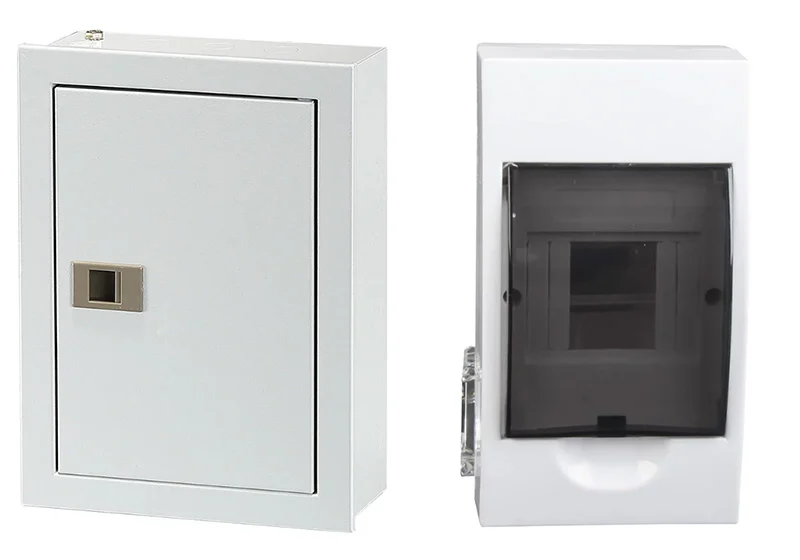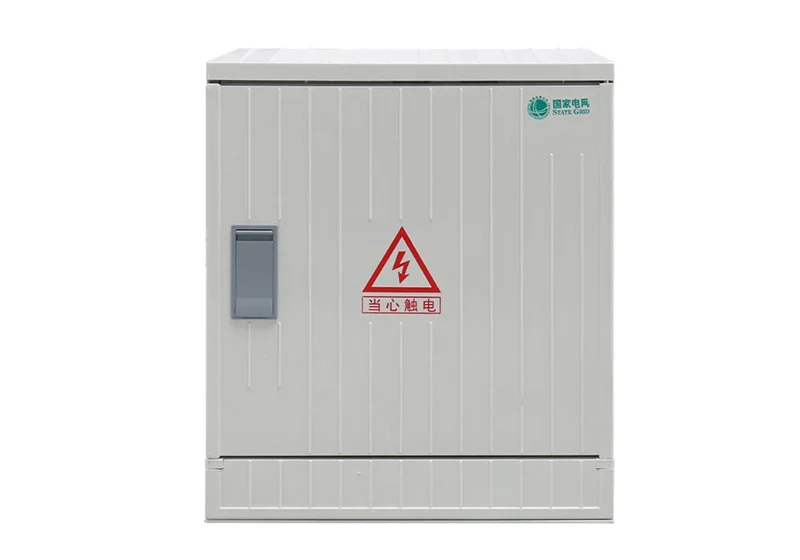
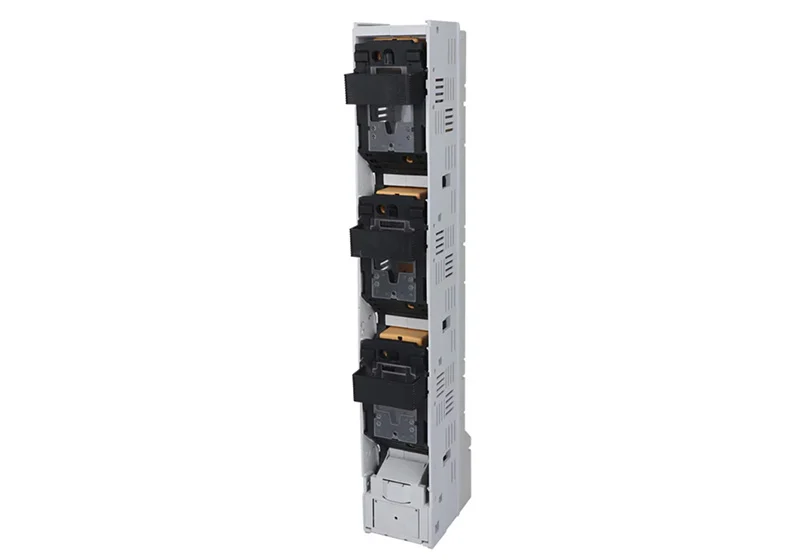
A fuse switch disconnector is a combined switching device that integrates an isolating switch with a fuse—often referred to as a “fused switch.” Its defining characteristic is that the moving contacts are formed directly by the fuse element or a fuse carrier containing a fuse element, allowing the device to simultaneously provide physical circuit isolation and protection against overloads or short circuits.
Unlike a standard isolating switch, it incorporates a fuse element capable of interrupting the circuit when the current becomes excessive. Unlike a circuit breaker, however, the fuse element must be replaced once it has operated (blown).
How a Fuse Switch Disconnector Works
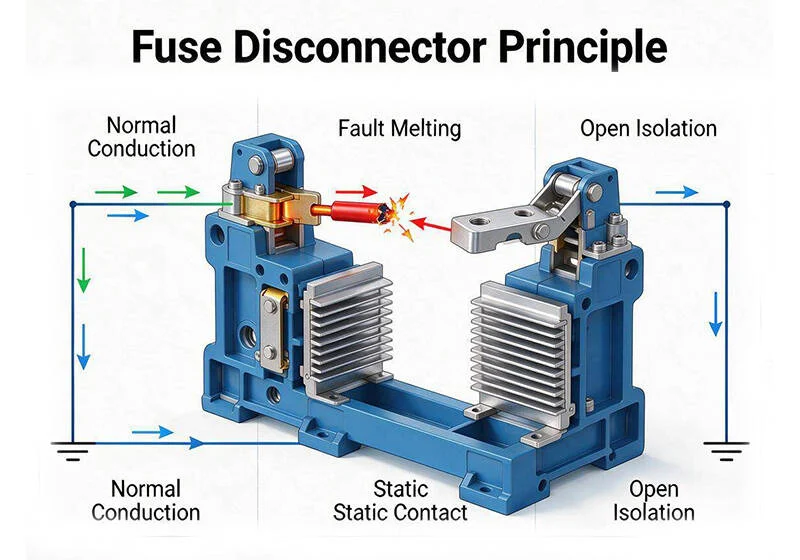
A fuse switch disconnector interrupts current using a replaceable fuse element: when the current exceeds a safe threshold, the fuse element melts (blows), and the switch mechanism then creates a physical break in the circuit.
Under normal operating conditions, the handle is used to engage or disengage the fuse carrier. In the “closed” (ON) position, it establishes a low-resistance conductive path; in the “open” (OFF) position, it creates a clearly visible physical gap, ensuring safety during maintenance. In the event of an overload or short circuit, the thermal effect of the current causes the fuse element to heat up and melt within milliseconds, instantly interrupting the fault current. An integrated arc-extinguishing grid simultaneously quenches any resulting electric arc. Furthermore, some models feature a striker pin mechanism that can signal a phase-loss fault, effectively combining “manual isolation” with “millisecond-speed overcurrent protection.”
Core Functions of a Fuse Switch Disconnector
Circuit Protection
The installed fuse (fuse element) provides protection against overloads and short circuits. High-breaking-capacity fuses can rapidly interrupt high fault currents and offer excellent current-limiting performance.
Safety Isolation
The isolating switch creates a point of disconnection between the power source and downstream equipment, allowing maintenance tasks to be performed safely.
Load Switching
When appropriately rated, a fuse switch disconnector can make and break normal operating currents. Its suitability depends on factors such as rated voltage, rated current, utilization category, and the type of connected load.
Fault Localization
When a fuse operates, only the affected feeder circuit is disconnected. Proper protection coordination enhances selectivity, ensuring that unaffected portions of a power distribution system continue to operate during a fault.
Compact System Design
By integrating switching, isolation, and fuse protection into a single unit, the number of individual components required within a distribution cabinet is significantly reduced.
Practical Applications of Fuse Switch Disconnectors
In industrial low-voltage power distribution systems, these devices are frequently installed at the incoming or branch circuits of distribution cabinets (such as GGD or MNS types), as well as at the inputs of distribution boxes and capacitor banks. Their integrated design eliminates the need for separate fuse bases, saving 30% of cabinet space compared to traditional “isolator + fuse” configurations. Furthermore, they provide a clearly visible physical break when switched off, fully meeting safety isolation requirements for maintenance.
In new energy applications and specialized operating environments, these units are well-suited for the DC side of photovoltaic (PV) systems. They offer a high DC breaking capacity—up to 20kA—effectively addressing the challenge of extinguishing DC arcs. Their flame-retardant housings and insulated, protective designs allow them to perform reliably in harsh industrial conditions, including environments with high humidity or dust, and even in outdoor settings such as rail transit, where they resist corrosion from salt spray.
In motor control circuits, they can provide direct protection for motors (up to 15kW) with direct-on-line starting. They are designed to withstand inrush currents—typically 6 to 8 times the rated current—without nuisance tripping. Meanwhile, their millisecond-range short-circuit interruption speed ensures rapid clearing of fault currents, preventing motors from burning out due to the impact of a short circuit.
Conclusion
Fuse switch disconnectors are widely used in distribution panels, industrial control cabinets, transformer systems, and other installations that require reliable protection and clear, definitive isolation points. If you are looking for high-quality fuse switch disconnectors for your project, please feel free to contact us.